
Is Spot Fat Reduction Real?
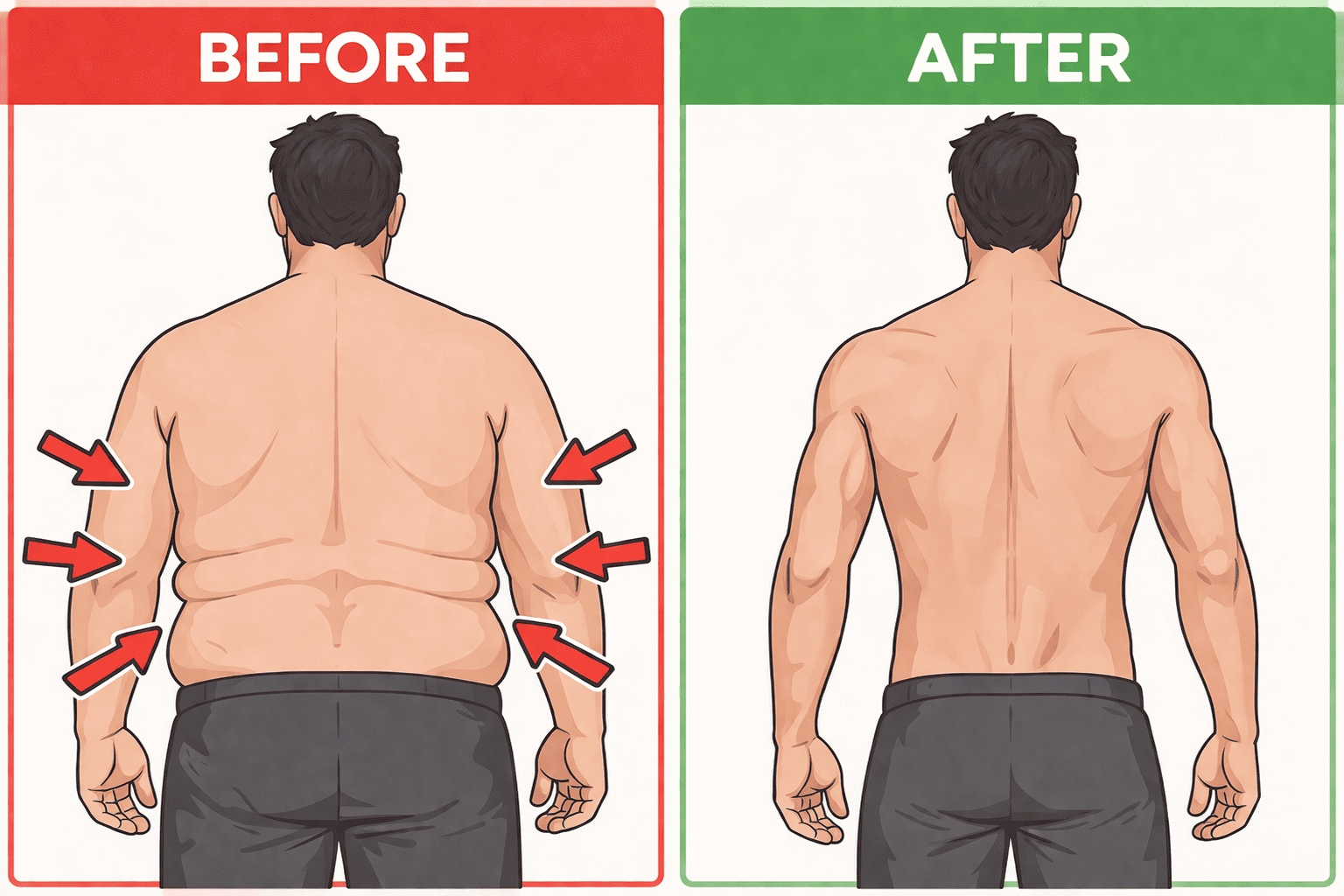
Online, especially on social media, you can find plenty of advice on how to lose fat specifically from your back, stomach, or arms. Before-and-after photos can make these methods look convincing. But does science actually support this? In this article, you’ll find out.
What Does Science Say About Spot Fat Reduction?
A large 2017 meta-analysis that combined data from 89 studies (C Merlotti et al. Int J Obes (Lond). 2017 May.) showed that none of the current weight-loss strategies, including lifestyle changes (diet and exercise), drug therapy, or bariatric surgery, work in a targeted way on visceral fat tissue. In all cases, the absolute reduction in subcutaneous fat was greater than the loss of visceral fat.
In other words, there is no “shortcut” that lets you burn fat from one specific area of the body. The most effective way to reduce fat on your stomach, back, or anywhere else is to lower your overall body fat percentage.
What Does This Study Mean for Us?
This study shows that science does not support the idea of spot fat reduction. But don’t worry. Here you’ll learn what actually helps improve not just the look of your back, but your whole body.
Everyone Stores Fat Differently
There are two main fat distribution patterns, described back in 1947 by the French physician Jean Vague: android (“apple”) and gynoid (“pear”).
Android Fat Distribution
Android fat distribution (abdominal, visceral, or “upper-body” type) is characterized by more fat stored in the upper body, especially around the stomach, along with a higher amount of visceral fat.
Visceral fat is deep internal fat that builds up around vital organs such as the liver, intestines, kidneys, and pancreas inside the abdominal cavity, rather than under the skin.
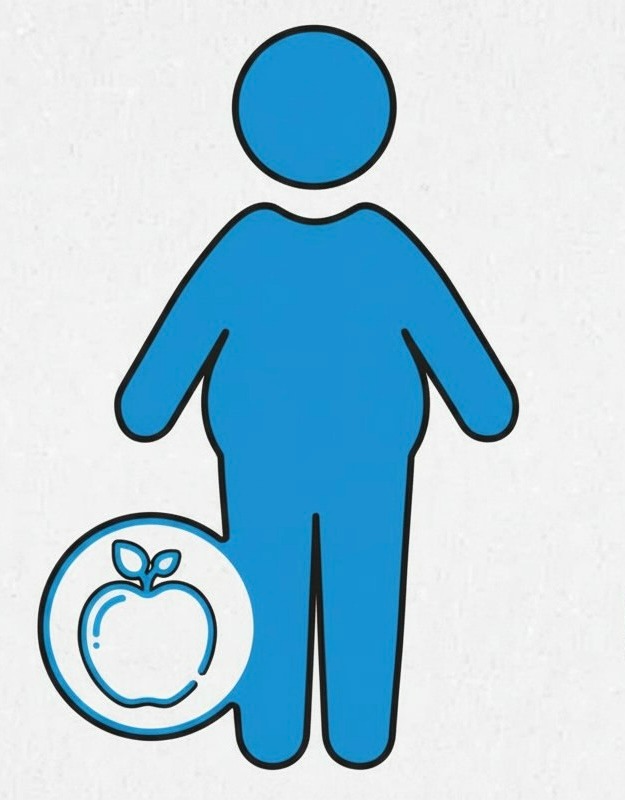
Android Fat Distribution
Gynoid Fat Distribution
With gynoid fat distribution (gluteofemoral, hip-and-thigh, or “lower-body” type), fat is stored more evenly, with most of it collecting around the hips, buttocks, and thighs.
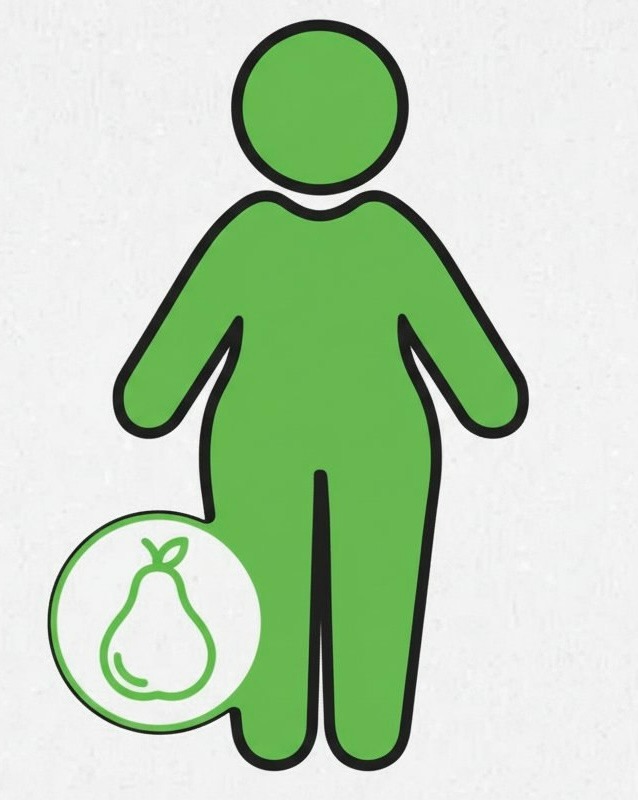
Gynoid Fat Distribution
What Should You Actually Do?
Since spot fat reduction is not possible, and fat distribution is largely influenced by genetics, the main goal is to reduce your overall body fat percentage.
So What Should I Do If I Want to Lose Back Fat?
These basic, effective strategies work best when combined:
- Lower your overall body fat percentage by creating a calorie deficit
- Strengthen and tone your back muscles
- Stay physically active to increase calorie burn
Strategy 1. Create a Calorie Deficit and Improve Eating Habits
To lose weight, you need a small calorie deficit, usually about 10-20% below your daily needs. It is also important to eat enough protein (1.6-2 g per kg of body weight) to help preserve muscle mass. Your diet should be varied and balanced.
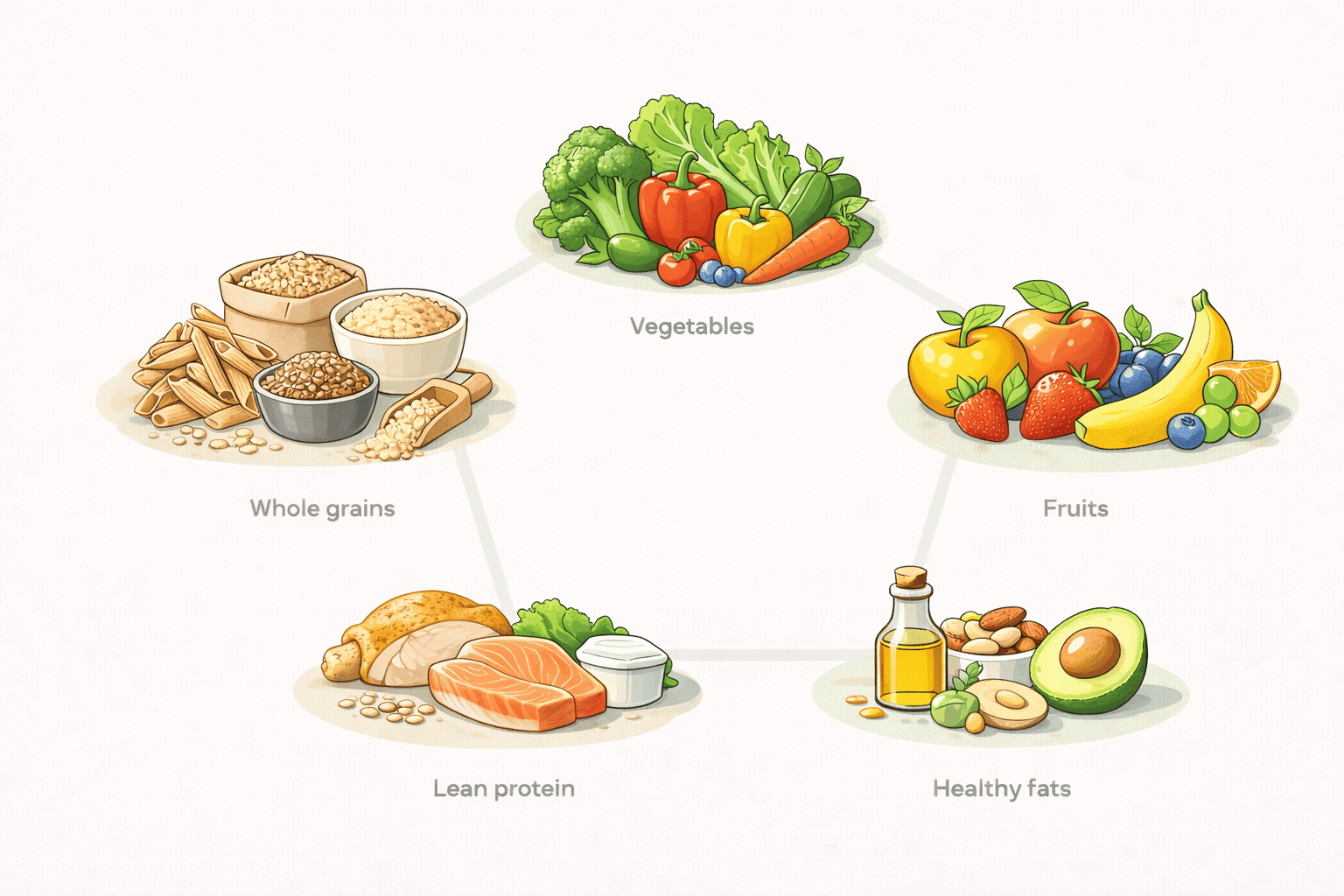
Key nutrition tips:
- Choose whole grains such as bulgur, quinoa, buckwheat, brown rice, whole grain pasta, oats, and barley
- Add vegetables to your meals
- Eat fruit regularly
- Choose lean protein sources like poultry, fish, lean cuts of red meat, legumes, cottage cheese, and yogurt
- Include healthy fats such as vegetable oils, nuts, and avocado
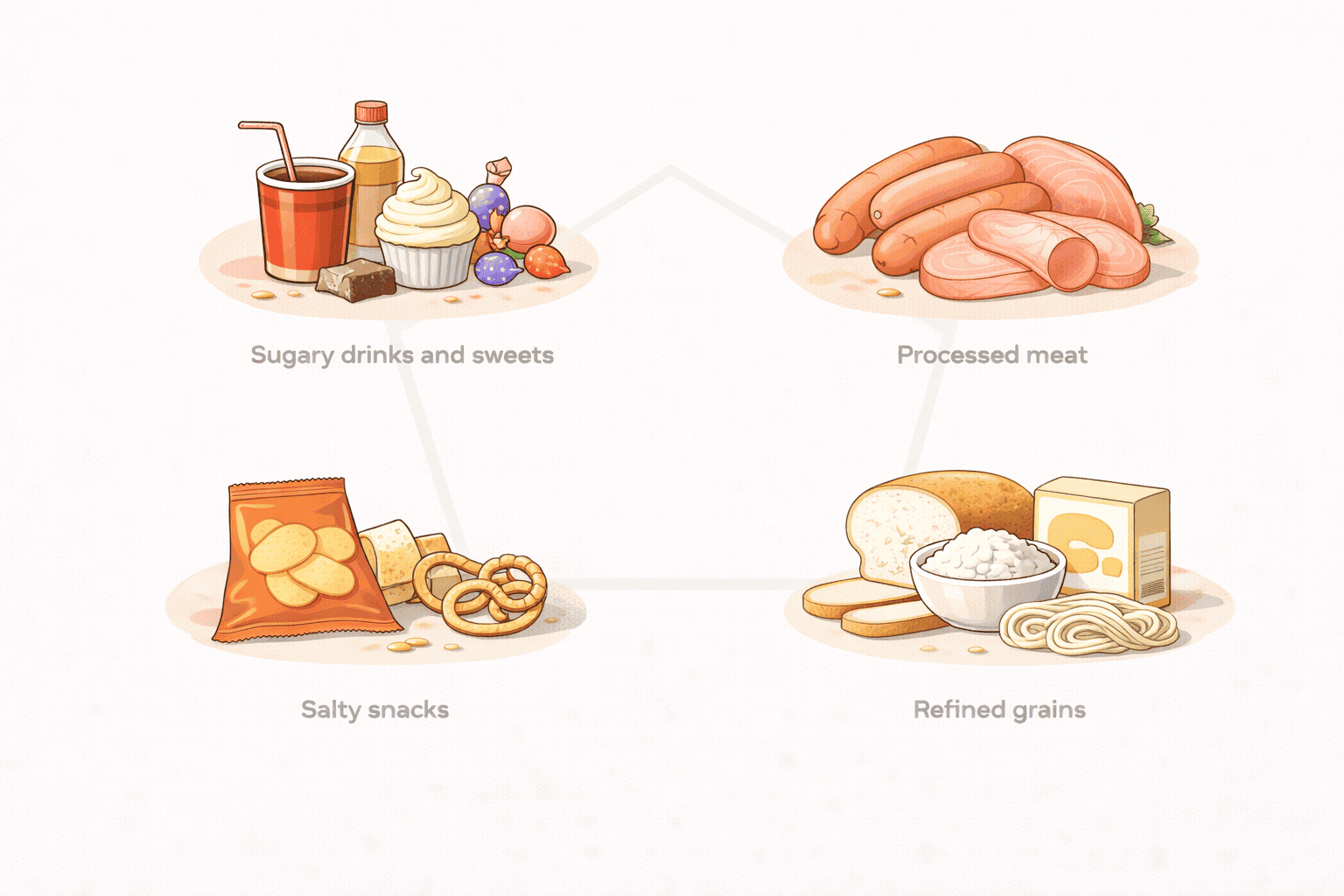
Limit these foods, but don’t cut them out completely:
- Sugary drinks and sweets
- Processed meat such as sausages and deli meats
- Salty snack foods
- Refined grains such as white bread, white rice, cereal, and noodles
IMPORTANT! Avoid extreme diets such as fasting, keto, or detox plans. They often lead to muscle loss, a slower metabolism, and quick weight regain.
Strategy 2. Strength Training
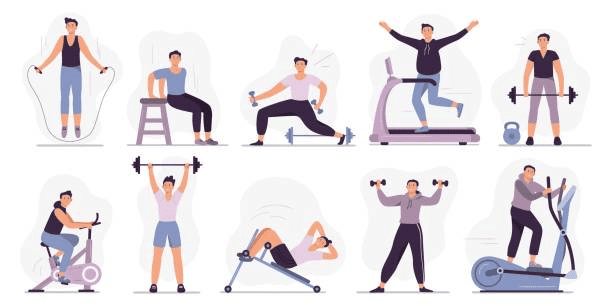
Do full-body strength training, not just back workouts. Basic exercises like squats, deadlifts, presses, and push-ups involve large muscle groups and are more effective overall.
“Targeting” the back muscles, such as the lats, traps, and spinal erectors, will not burn the fat sitting right above them, but it can:
- Improve your posture, which can make your back look straighter and slimmer
- Build a stronger muscle base, so your shape looks more defined as your overall body fat goes down
Examples of back exercises include pull-ups (or lat pulldowns), barbell or dumbbell rows, back extensions, and pullovers.
Strategy 3. Cardio Workouts
Cardio such as brisk walking, running, cycling, or swimming helps increase your daily calorie burn and makes it easier to create a calorie deficit. The best long-term approach is to combine both types of exercise, strength training and cardio, while also sticking to a balanced diet.
IMPORTANT! If you focus only on cardio, you may lose not just fat but muscle too, which can slow your metabolism over time and worsen your body composition.
Where Should You Start?
Review and Adjust Your Diet
Build healthy eating habits gradually so they stay with you for the long run. You do not need to cut out every food that nutrition experts warn you about. There is no such thing as a “bad” food in itself; the real issue is too much of it.
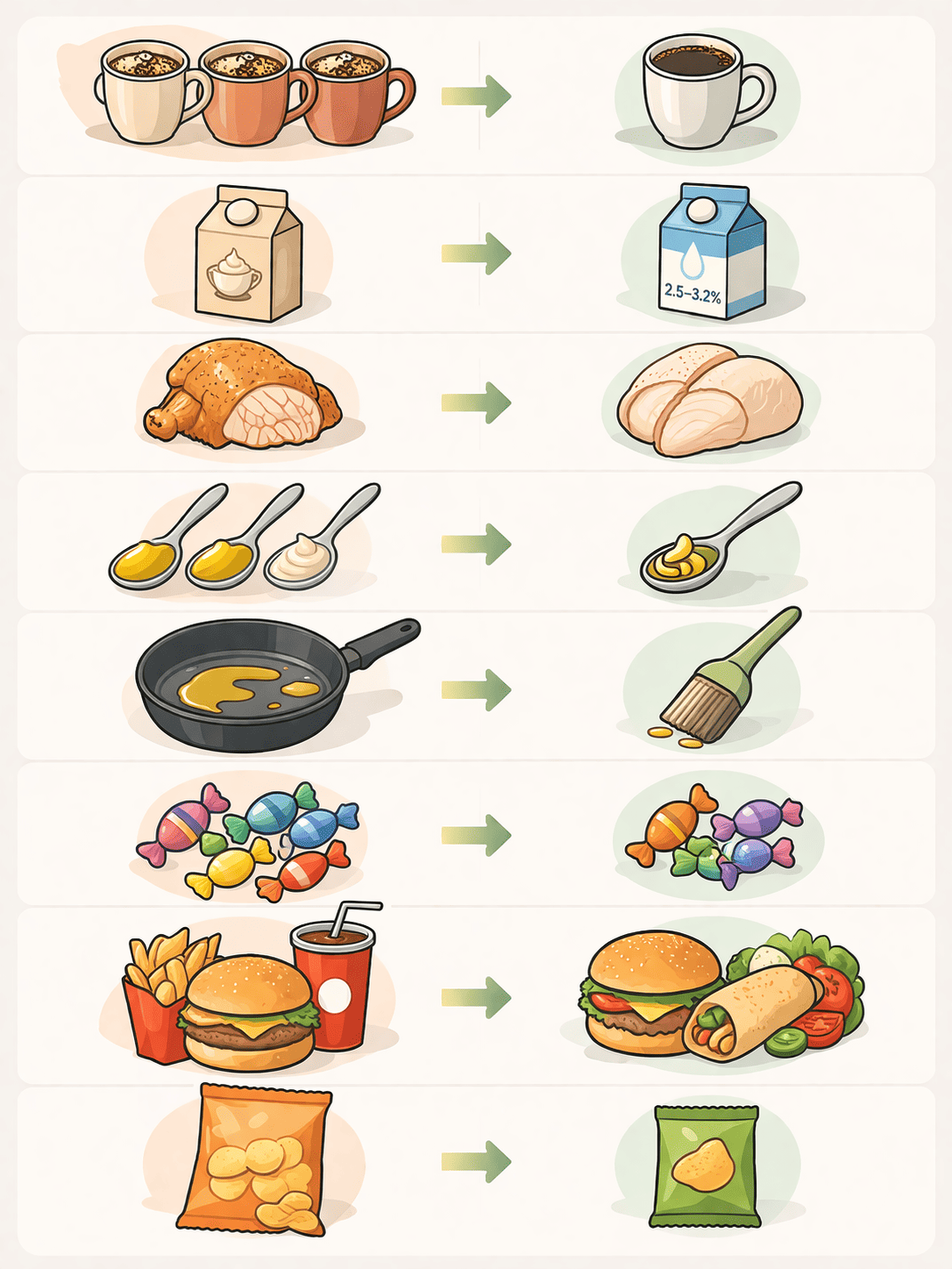
Here are some simple ways to create a calorie deficit without shocking your body or counting every calorie:
- If you drink 3 cups of sweet coffee, cut it down to 1 cup a day
- If you add cream to tea or coffee, switch to regular milk with moderate fat content
- If you eat chicken or turkey with the skin on, remove the skin
- If you dress your salad with 2-3 tablespoons of oil or mayo, use just 1 tablespoon
- If you fry eggs in a lot of oil, use a brush or just a few drops instead
- If you usually eat 5-6 candies or cookies, stop at 3-4
- If you often eat fast food, choose a healthier option from the menu
- If you buy large packs of snacks, choose a smaller pack
For a more structured approach and extra support, you can use our Health Coach bot. It can help you improve your diet, build healthier eating habits, and support you along the way.
Try it now
Don’t Skip Meals to Avoid Overeating Later
Frequent overeating can easily lead to excess calories. Try not to let yourself get too hungry, don’t skip meals on purpose, and include snacks when needed.
Keep a Food and Mood Journal
Try keeping a food journal for at least 3 days and write down everything you eat and drink. This can help you see the full picture of your eating habits. It is also useful to note how you feel before meals, since emotions may be one of the reasons behind frequent overeating.
Look at Your Physical Activity
Take a look at how active you are during the day or week. If you are not very active, start small. Any movement is better than none. Begin with 20-30 minutes of walking a day at a pace that makes you slightly out of breath. Then gradually increase the load by adding short home workouts or extra movement during walks. If possible, work with a qualified trainer who can build a program that suits you.
IMPORTANT! If your trainer gives you too much load, ignores your medical history, or does not watch your technique, that is a sign to find someone else.
Be Physically Active Regularly
You do not have to go to the gym to stay active. You can do home workouts from videos, dance energetically to your favorite song, take the stairs instead of the elevator, or go for a brisk walk outside with your pet.
Final Thoughts
Unfortunately, it is not possible to lose fat only from your back. But a balanced approach that includes a sensible calorie deficit, strength training, especially for the back, and cardio will absolutely improve your body over time. Your back can look firmer, more defined, and leaner as body fat goes down and your muscles get stronger. Be patient, stay consistent, and the results will come.