
What is it and what is it for?
A food diary is a simple self-tracking tool. It helps you record everything you eat during the day. Whether you want to lose weight, gain weight, or build healthier eating habits, keeping a diary can help you reach your goals.
In this article, you will learn how to keep a food diary and how to review your notes.
How to keep a food diary
You do not have to write your diary in a paper notebook. You can use your phone: an app, notes, or your photo gallery. The most important thing is to make the diary as complete and accurate as possible, and to record every meal.
Your diary should include:
- Meal time. Track when you eat.
- Food type and amount. The more detailed and accurate your notes are, the more useful they will be. Do not just write “pumpkin waffles.” Write “pumpkin – 1 cup,” “egg – 1,” “oat flour – 3 tbsp,” and so on. Include all ingredients and amounts if you know them. You do not have to weigh everything. You can use spoons, cups, and other simple measures.
- Fluids. Write down everything you drink: tea with milk or cream, water, juice, coffee, and so on.
- Hunger and fullness. If you often eat when you are not hungry, or if it is hard to stop eating in time, this point is especially important. Tracking hunger before meals and fullness after meals helps you reconnect with your body’s natural needs.
- Emotions. Write down how you felt before and after eating. This can help you see whether you often use food to cope with difficult emotions.
- Sleep. Note how many hours you slept. Too little or too much sleep can affect metabolism and may contribute to weight gain.
- Physical activity. Record any activity you had during the day: cleaning, dancing, cycling, walking, or exercise.
Why should you keep a food diary?
If you thought a food diary was only for weight loss, here are a few more benefits:
- Mindful eating. A diary helps you pay more attention to food choices and portion sizes. You may think twice before eating large portions of sweets or snacks if you know you will write them down.
- Weight control. It helps because you become more aware of the foods you choose.
- Finding food sensitivities. Some people have problems with certain foods but never notice the pattern, such as stomach pain, bloating, or diarrhea. Looking at how you feel after different foods can help you spot possible triggers.
- Changing eating habits. When you see the full picture of your diet, you can adjust your schedule, eat when you are hungry instead of “when you should,” and sometimes replace sweets with fruit.
IMPORTANT: People with eating disorders should not keep a food diary without support from a doctor, psychologist, or psychiatrist.
How to analyze a food diary
The most effective way is to review your food diary with a nutrition specialist or with our bot.
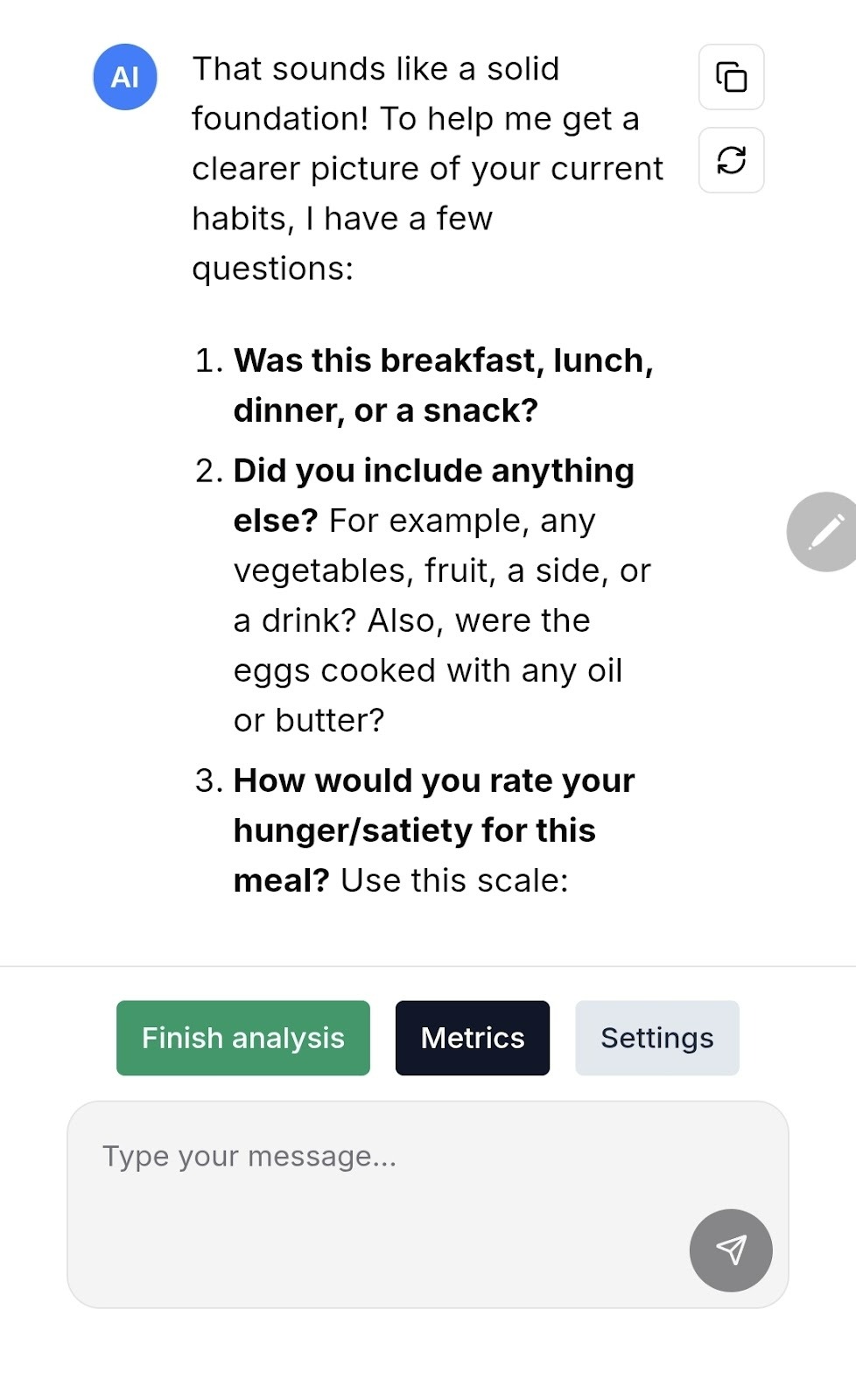
Try it now
If you review your diary on your own, do not look at each day separately. Look at the whole week. This makes it easier to notice repeated habits:
- Meal regularity: long gaps between meals, late-night snacks, or frequent snacks on the go.
- Diet quality: whether you get enough vegetables, fruit, protein, grains, and water.
- Repeated triggers: stress, tiredness, boredom, or lack of sleep that leads to extra eating.
- Portions and common weak spots: sweet drinks, baked goods, coffee with add-ins, and snacks.
- How you feel after eating: heaviness, sleepiness, bloating, more energy, or long-lasting fullness.
IMPORTANT: Do not try to make your diary perfect from the first day. During the first week, eat as usual and do not change anything. This will help you review your diet more accurately.
What next?
After reviewing your diary, do not try to fix everything at once. Choose 1-2 of the most obvious patterns, such as late overeating, chaotic snacking, or not enough protein and vegetables. Build healthier eating habits step by step and keep using your diary.